9 Incredible Tiered Patio Ideas to Transform Your Outdoor Space


Imagine stepping into your backyard and discovering a multi-level oasis that turns ordinary outdoor living into an extraordinary experience. Tiered patio ideas offer more than just visual appeal—they create functional zones, maximize limited space, and provide endless opportunities for personal expression. In today’s homes where outdoor areas serve as extensions of our living rooms, tiered patios have emerged as smart solutions for uneven terrain or flat yards needing dimension. They allow you to separate dining areas from lounging spaces, create intimate conversation nooks, and establish visual flow that guides guests through your landscape. With proper planning, these elevated designs can transform awkward slopes into beautiful terraces that increase property value while providing years of enjoyment. Whether you have a sprawling yard or a compact urban space, tiered patios adapt to your needs, offering solutions for entertainment, relaxation, and connection with nature. The beauty lies in their versatility—from rustic stone terraces to modern concrete platforms, each level tells part of your outdoor story. As we explore nine inspiring approaches, you’ll discover how to turn elevation challenges into design opportunities that make every square foot work harder for your lifestyle.
Natural Stone Tiered Patio Ideas for Rustic Charm
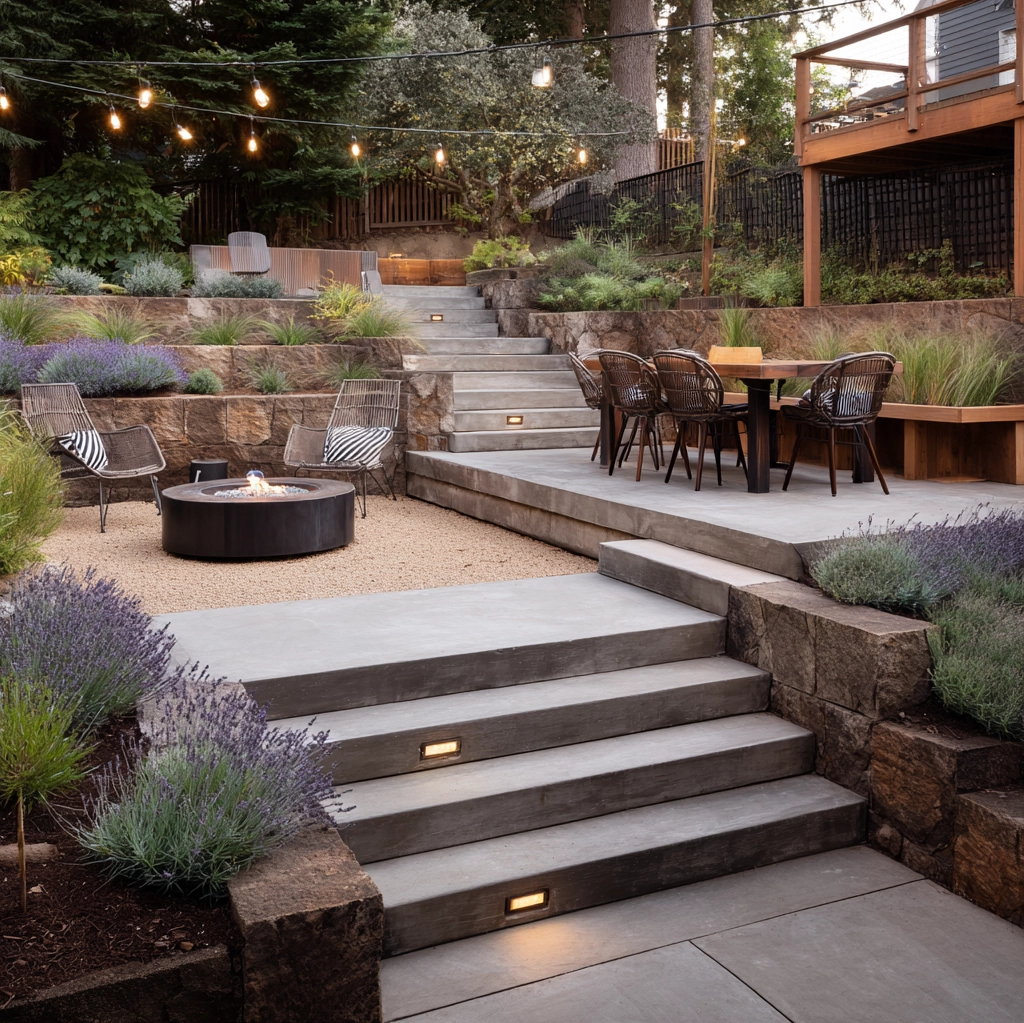
Natural stone tiered patio ideas bring organic elegance to any outdoor space, creating timeless landscapes that age beautifully. Using materials like flagstone, slate, or fieldstone allows you to build terraces that blend seamlessly with surrounding gardens. These materials offer excellent durability while providing natural texture and color variations that manufactured products can't match. Start by assessing your slope—gentle inclines work well with broad, gradual steps between levels, while steeper areas might require retaining walls built from stacked stone. Consider using local stone varieties to reduce costs and enhance regional character. For the main patio surface, irregular flagstones create a charming, informal look, while cut sandstone offers more uniformity. Between levels, incorporate planting pockets within retaining walls for cascading greenery like creeping thyme or sedum. These living walls soften hard edges and add vertical interest. Lighting plays a crucial role in multi-level stone patios—recessed LED lights in step risers or subtle uplighting against stone walls ensure safe navigation while highlighting textures after dark. Remember proper drainage—stone patios need a gravel base and slight pitch away from your home. For cohesion, repeat stone types across all levels while varying sizes and patterns. A natural stone tiered patio becomes more beautiful over time as moss and lichen develop, creating that coveted aged appearance that feels established rather than newly installed.
Modern Concrete Tiered Patio Ideas for Clean Lines
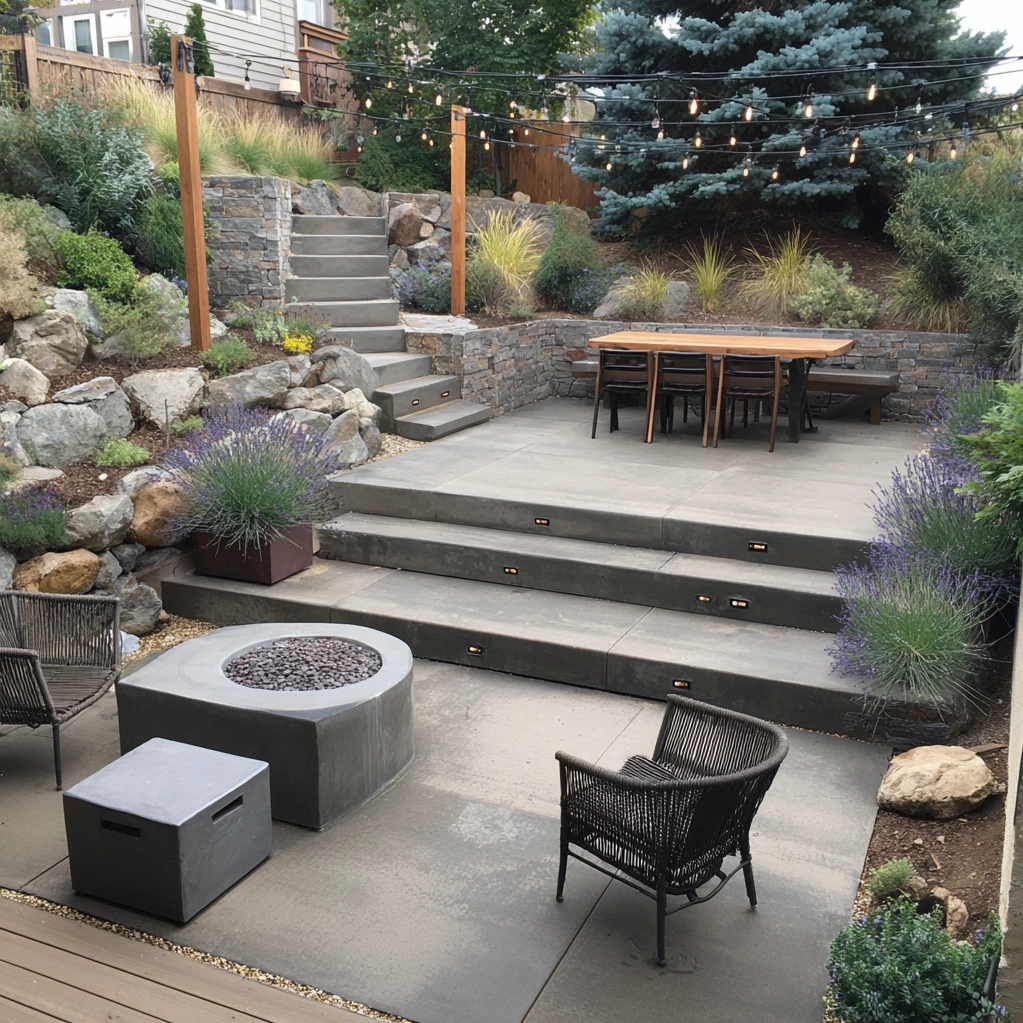
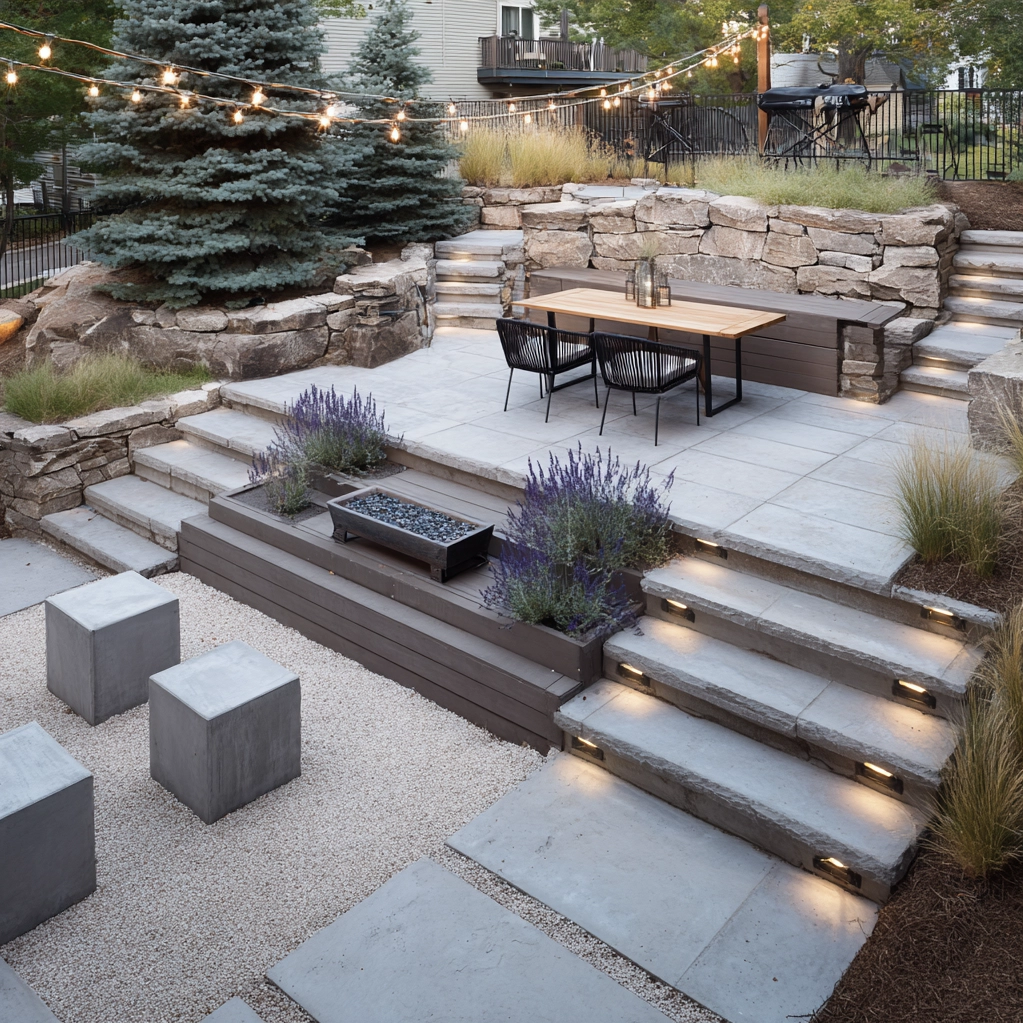
Modern concrete tiered patio ideas offer sleek sophistication through minimalist design and innovative materials. Unlike traditional poured concrete, today's options include textured finishes, integral colors, and geometric scoring that elevate basic slabs to designer surfaces. Stamped concrete can mimic more expensive materials like wood or stone while providing durability and lower maintenance. For tiered designs, consider using concrete in contrasting ways—smooth polished surfaces on main levels with textured, non-slip finishes on steps and transition areas. Corten steel planters or retaining walls create striking contrasts against gray concrete, adding warmth through rust-colored accents. Modular concrete pavers offer flexibility for tiered layouts, allowing you to create patterns that visually connect different levels. Try herringbone or basketweave arrangements that continue across terraces, guiding the eye through the space. For contemporary tiered patio ideas, incorporate built-in concrete furniture—benches, fire pits, or planters that emerge seamlessly from the structure. These elements reduce visual clutter while maximizing functionality. Lighting integration becomes art with modern concrete designs—consider fiber optic strands mixed into the concrete for starry-night effects or linear LED strips along step edges. Water features work beautifully with concrete tiers—a thin water sheet cascading from one level to another adds movement and sound. For warmer climates, concrete's thermal mass helps regulate temperature, staying cooler than darker materials. Maintenance is straightforward—annual sealing protects against stains while keeping the modern aesthetic crisp and clean.
Wooden Deck Tiered Patio Ideas for Warmth and Versatility
Wooden deck tiered patio ideas combine natural warmth with flexible construction, perfect for creating cozy outdoor rooms at different elevations. Composite decking materials now offer the look of wood with enhanced durability and minimal maintenance, resisting rot, insects, and fading. When planning multi-level deck patios, consider how each tier will function—higher levels often work best for dining with views, while lower terraces suit lounging areas closer to gardens. Use consistent railing designs across levels to unify the structure, choosing between glass panels for unobstructed views or horizontal slats for modern texture. Built-in seating maximizes space on smaller tiers, with storage beneath for cushions and outdoor accessories. For seamless transitions between levels, design steps that are integral to the deck structure rather than add-ons, using the same decking material for continuity. Lighting should be planned during construction—post cap lights, step lights, and under-rail LEDs create ambiance while ensuring safety. Planting integration softens wooden structures—consider cutouts in decking for tree growth or built-in planter boxes along edges. For sloping sites, wooden tiered patio ideas can incorporate terraced gardens between levels, using retaining walls made from matching wood or complementary stone. Staining all wood elements the same color creates cohesion, while using two complementary stains can define different zones. Remember local building codes for railings and step dimensions, especially for higher tiers. With proper planning, wooden tiered patios become natural extensions of indoor living spaces, offering comfortable areas for relaxation and entertainment across multiple elevations.
Budget-Friendly Tiered Patio Ideas with Creative Materials
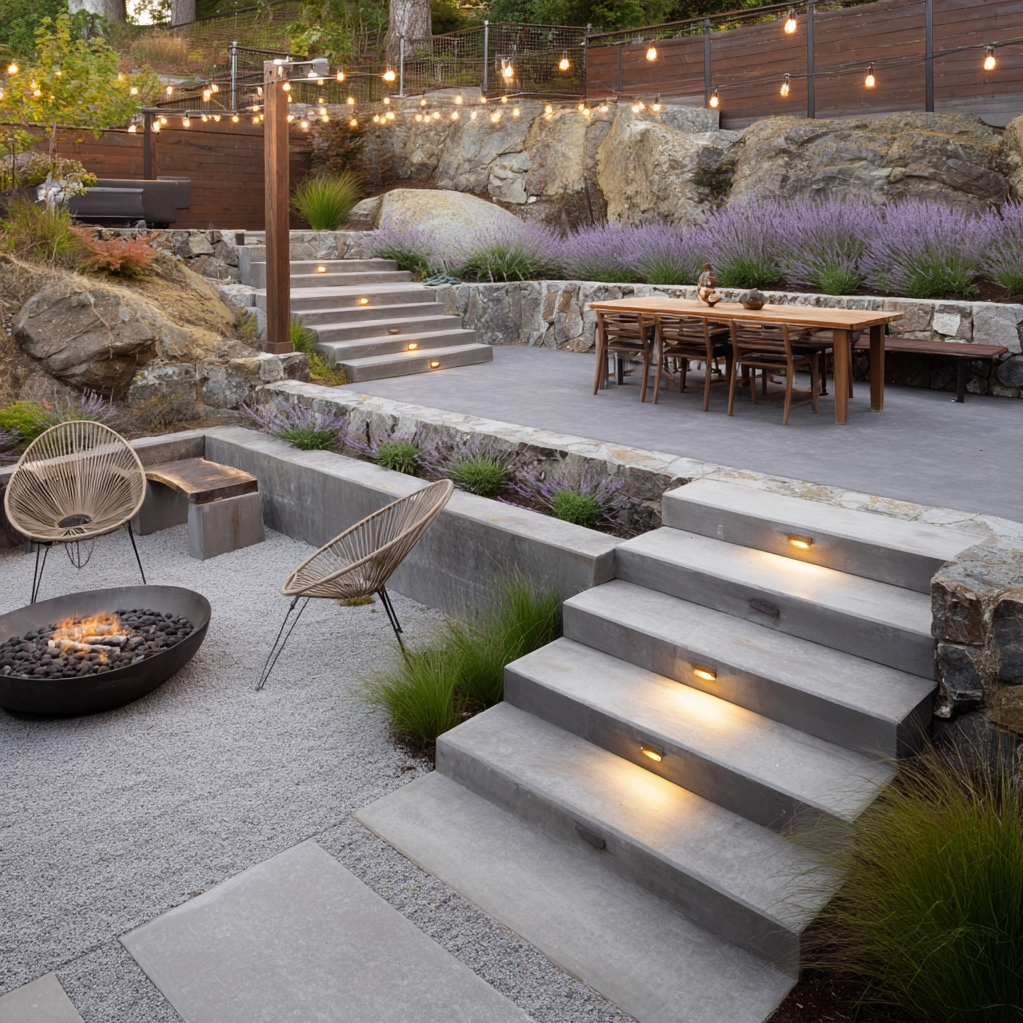
Budget-friendly tiered patio ideas prove that stunning outdoor spaces don't require extravagant spending. With smart material choices and DIY approaches, you can create multi-level areas that look custom-designed. Gravel terraces offer excellent drainage and affordability—use landscape fabric beneath gravel to prevent weeds, and contain each level with inexpensive retaining wall blocks or railroad ties. Pallet wood upcycling creates charming tiered platforms—sand and seal pallets for small seating areas connected by simple steps. Concrete pavers provide another economical option, allowing you to build terraces gradually as budget permits. For plant-focused tiered patio ideas, create raised beds at different heights using cinder blocks or recycled bricks, filling them with herbs, vegetables, or flowers. These living tiers add color and fragrance while defining spaces. Mulch pathways between levels cost little but add organic texture—choose dark mulch for contrast with greenery. Repurposed materials shine in budget designs—old bricks become charming step risers, while salvaged stones create unique retaining walls. For temporary or rental-friendly solutions, use large container planters at varying heights to simulate tiers without permanent construction. Group pots on wooden crates or concrete blocks to establish different levels. Lighting needn't be expensive—solar path lights along steps and battery-operated string lights overhead create magical evenings without electrical work. The key to successful budget tiered patio ideas lies in consistency—choose one or two material types and repeat them throughout all levels. This creates intentional design rather than haphazard collection. With creativity and phased implementation, you can build beautiful tiered spaces that grow with your budget.
Conclusion
Tiered patio ideas offer transformative potential for any outdoor area, turning challenges like slopes or limited space into design advantages. Whether you choose natural stone for rustic appeal, modern concrete for clean aesthetics, warm wood for traditional comfort, or budget materials for creative solutions, multi-level patios create functional zones that enhance how you live outdoors. The nine approaches discussed demonstrate that successful tiered designs balance visual flow with practical considerations—proper drainage, safe transitions between levels, and material consistency across terraces. As outdoor living continues to evolve, tiered patios will likely incorporate more sustainable features like permeable paving, native plant integrations, and energy-efficient lighting. Looking forward, smart technology may bring automated irrigation systems between levels or app-controlled lighting scenes that highlight different tiers for various occasions. The most enduring trend will remain personalization—tiered spaces that reflect individual lifestyles, whether for large-scale entertainment or intimate family moments. Start by sketching your space, noting sun patterns, views, and natural transitions. Even simple two-level designs dramatically increase usable area while adding architectural interest. Remember that tiered patios become more valuable over time, both in enjoyment and property appeal. Your outdoor oasis awaits—begin with one terrace and let it naturally evolve into the multi-level retreat you've imagined.
Frequently Asked Questions
Q: What are the main benefits of choosing tiered patio ideas over a single-level patio?
Tiered patio ideas offer several advantages over single-level designs. First, they maximize usable space on sloped or uneven terrain that might otherwise go unused. Second, they create natural separation between functional zones—you can have dining on one level, lounging on another, and gardening on a third, all within visual connection. Third, tiered designs add architectural interest and visual depth, making small yards appear larger. Fourth, they improve drainage by breaking up water flow across slopes. Finally, multi-level patios often increase property value more than flat patios due to their custom-designed appearance and efficient use of challenging landscapes.
Q: How do I ensure safety when implementing tiered patio ideas, especially with steps between levels?
Safety is crucial for tiered patio ideas. For steps between levels, follow standard dimensions: risers should be 4-7 inches high, with treads at least 11 inches deep. Maintain consistent measurements across all steps to prevent tripping. Install sturdy railings for any tier more than 30 inches above the next level, ensuring they can support weight. Use non-slip surfaces on steps and potentially on main levels if they'll be wet frequently—textured concrete, brushed stone, or composite decking with grip patterns work well. Lighting is essential—install step lights, path lighting along transitions, and overall ambient lighting. For evening use, ensure at least 1-foot candle of illumination on walking surfaces. Also consider edge marking for subtle level changes, using contrasting materials or low-voltage rope lights along terrace boundaries.
Q: Can tiered patio ideas work in small urban yards, or do they require large spaces?
Tiered patio ideas excel in small urban yards, often making them appear larger through clever design. In compact spaces, even two subtle levels—perhaps an 8-inch difference—create visual separation without consuming much area. Use vertical elements like raised planters or low retaining walls to define tiers instead of dramatic elevation changes. Corner tiered designs work well in small yards, creating L-shaped levels that maximize perimeter space. For tiny urban plots, consider circular or curved tiered patio ideas that guide movement efficiently. Container gardening at varying heights can simulate tiers without permanent construction—group large pots on platforms of different elevations. The key for small spaces is proportion—keep tiers shallow and materials light-colored to maintain airiness. Even in yards as small as 10×10 feet, a two-level patio with built-in seating on the upper tier and planting on the lower can transform the space completely.